Citric Acid Market 2025: Global Insights, Applications & Reliable Suppliers
🌍 Global Citric Acid Market Overview 2025
Citric acid continues to be one of the most widely used organic acids worldwide, essential in food, beverage, pharmaceutical, and cleaning applications. Derived naturally from citrus fruits or produced via fermentation of sugars, it serves as an acidulant, preservative, antioxidant, and chelating agent, making it indispensable across industries.
The global citric acid market was valued at USD 3.6 billion in 2024 and is expected to expand at a CAGR of around 5.2% from 2025 to 2030 (source: Grand View Research). Increasing demand for processed food and beverages, coupled with the rise of eco-friendly cleaning formulations, is driving consistent market growth.
Furthermore, a growing shift toward natural, biodegradable ingredients has strengthened citric acid’s position as a sustainable alternative to synthetic chemicals. From industrial descalers to vitamin blends, this organic acid continues to dominate both consumer and industrial formulations.
📊 Citric Acid Market Breakdown by Application (2025 Forecast)
Application Sector
Market Share (%)
Growth Driver
Food & Beverages
58%
Natural preservative and flavor enhancer
Pharmaceuticals
16%
Effervescent tablets, syrups, and vitamin blends
Personal Care & Cosmetics
10%
Natural pH regulator and antioxidant
Industrial & Cleaning Solutions
12%
Eco-friendly metal and surface cleaner
Others (Agriculture, Textiles)
4%
Chelating agent for fertilizers and fiber treatment
The food and beverage industry dominates citric acid consumption, particularly in carbonated drinks, confectionery, and canned foods. Meanwhile, the pharmaceutical and cosmetics sectors are seeing steady growth as consumers seek natural ingredients in health and skincare formulations.
🌐 Top Producing Regions and Supply Chain Insights
Region
Key Producing Countries
Market Insight
Asia-Pacific
China, India, Thailand
Dominates global production; cost-effective fermentation methods
Europe
Germany, Belgium
Focus on sustainable, pharma-grade quality standards
North America
USA
Growing domestic demand for food, beverages, and green cleaning agents
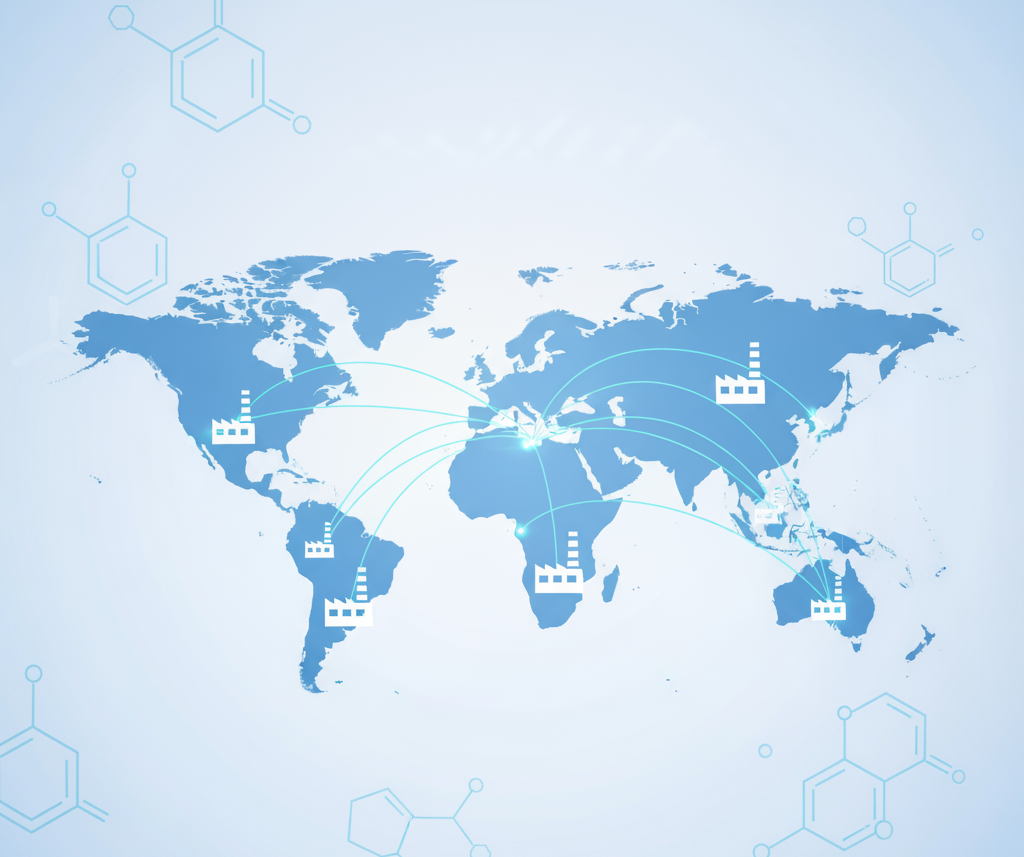
Asia-Pacific remains the largest producer and exporter of citric acid, with China accounting for over 60% of global output. However, North American and European buyers increasingly prefer regionally sourced, verified suppliers for regulatory compliance, consistent quality, and shorter lead times — driving demand for citric acid suppliers in the USA like Coresol.
⚗️ Key Industry Trends Shaping the Citric Acid Market
Natural Ingredient Movement Consumers are moving away from synthetic preservatives. Citric acid, derived from renewable resources, fits perfectly into the “clean label” trend.
Processed Food Growth Rising consumption of packaged and ready-to-eat products boosts the use of citric acid as a natural flavor enhancer and stabilizer.
Eco-Friendly Cleaning Solutions Citric acid is replacing phosphates and harsh acids in detergents, offering safe, biodegradable cleaning performance.
Pharmaceutical Innovation Citric acid’s solubility and safety make it ideal for oral medications, effervescent tablets, and vitamin formulations.
Supply Chain Localization Post-pandemic, industries are seeking local or regional suppliers to ensure reliability and reduce import dependency.
🧴 Technical Grades and Quality Considerations
When sourcing citric acid, buyers must evaluate both form and grade:
Type
Characteristics
Typical Uses
Citric Acid Anhydrous
Crystalline, low moisture, high purity
Powdered drinks, tablets, industrial cleaning
Citric Acid Monohydrate
Slightly moist crystalline form
Beverages, confectionery, cosmetics
Quality Parameters to Check:
Purity ≥ 99.5%
Heavy metals ≤ 5 ppm
Moisture content ≤ 0.5%
Compliance with FCC, USP, BP, ISO standards
Packaging: 25 kg / 50 kg / Jumbo bags with batch traceability
Reliable suppliers also provide COA (Certificate of Analysis) and SDS (Safety Data Sheet) for every batch to ensure transparency and compliance.
🧩 What Buyers Should Look for in a Citric Acid Supplier
Choosing the right citric acid supplier is critical for manufacturers that depend on product consistency and regulatory compliance. Key factors include:
Product Traceability: Verified manufacturing sources and batch data.
Consistency: Uniform purity and granulation across shipments.
Availability: Stock readiness to prevent supply chain disruptions.
Documentation: Export-ready technical data, COA, and SDS.
Support: Logistics and freight management expertise.
A good supplier doesn’t just sell — they partner with clients for reliable, long-term supply chain success
🌱 Sustainability and Responsible Sourcing
Citric acid’s natural origin makes it one of the most environmentally preferred chemicals. Coresol strengthens this advantage by partnering with manufacturers committed to:
Reducing carbon emissions
Using renewable feedstocks
Minimizing chemical waste and water usage
Our approach supports global clients seeking sustainable and regulatory-compliant ingredients for modern formulations.
📚 Sources & Market References
To ensure accuracy and reliability, this article draws on verified industry insights, market data, and scientific research related to citric acid production, global demand, and supplier trends.
Frequently Asked Questions (FAQ) About Citric Acid
1. Is vinegar considered a citric acid?
No, vinegar and citric acid are not the same. Vinegar contains acetic acid, which is produced from the fermentation of ethanol, while citric acid is derived from citrus fruits or sugar fermentation. Both are natural acids used for cleaning, preservation, and flavoring—but citric acid is milder and more commonly used in food and pharmaceutical formulations.
2. What are the common uses for citric acid?
Citric acid has versatile applications across industries. It acts as a natural preservative in foods and beverages, a pH adjuster in cosmetics, and a chelating agent in cleaning products. It’s also used in pharmaceutical formulations, such as effervescent tablets and vitamin blends, due to its safety and solubility.
3. Is citric acid safe for your body?
Yes. Citric acid is recognized as safe (GRAS) by the U.S. FDA when used within standard limits. Naturally found in citrus fruits like lemons and oranges, it plays a key role in metabolism. However, concentrated industrial-grade citric acid should not be ingested.
4. Is baking soda and citric acid the same thing?
No, they are completely different substances. Citric acid is an organic acid, while baking soda (sodium bicarbonate) is a mild alkaline compound. When combined, they produce a fizzy reaction—commonly used in bath bombs and cleaning solutions.
5. What are the benefits of citric acid in drinking water?
In small amounts, citric acid helps balance pH levels, reduce limescale buildup, and can enhance taste. It’s also used in water treatment processes for its ability to bind metal ions. However, excessive concentrations are not recommended for direct consumption.
🧭 Partner with Coresol – Your Trusted Citric Acid Supplier
In an evolving global market, dependable sourcing is key. Whether you’re a food processor, pharmaceutical company, or industrial formulator, Coresol provides consistent, high-quality citric acid tailored to your needs.
Let’s build a reliable chemical supply chain that keeps your production running smoothly, sustainably, and on time.



Leave A Comment