
- sales@coresolusa.com
- +1(832) 886-0007
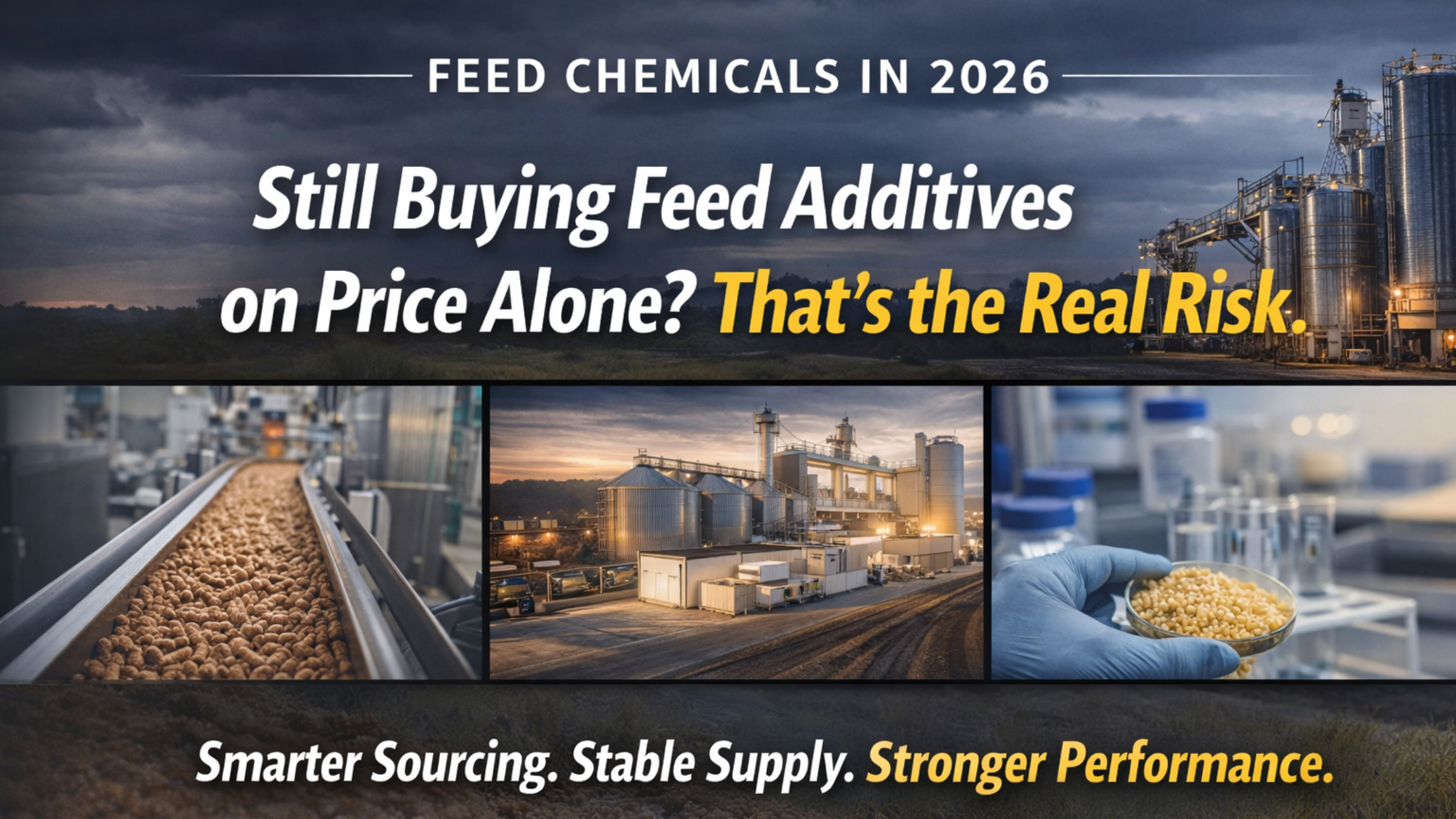
The global animal feed chemical market is entering a new phase in 2026. Rising protein consumption, regulatory pressure, and the need for higher livestock productivity are reshaping sourcing strategies worldwide.
For procurement managers and feed manufacturers, sourcing an animal feed chemical is no longer just about finding the lowest price. It now demands strict quality control, regulatory compliance, and supply chain stability.
In an increasingly volatile market, strategic sourcing has become a competitive advantage.
An animal feed chemical refers to specialized feed additives added to livestock diets to enhance:
These chemicals are essential across:
Without the right feed formulation, livestock productivity and farm profitability can decline significantly.
Several animal feed chemical categories are seeing strong global demand in 2026:
Amino acids are critical for protein synthesis and feed efficiency, particularly in poultry and aquaculture.
Organic acids support gut health and act as antibiotic alternatives.
These improve skeletal development and metabolic stability.
Regulatory restrictions in Europe, parts of Asia, and North America are accelerating demand for:
The animal feed chemical market is moving toward performance-enhancing yet regulatory-compliant formulations.
Feed-grade chemical production depends heavily on:
Fluctuations in raw materials directly affect amino acid pricing and supply stability.
Smart buyers hedge through diversified sourcing.
Importers must now ensure complete documentation:
In 2026, compliance failures can block shipments or trigger financial penalties.
Production is concentrated in:
Over-reliance on a single origin increases risk exposure. Multi-origin sourcing is now considered best practice.
Animal feed chemical buyers face:
Low-cost sourcing can result in:
Consistency in feed quality directly impacts livestock output.
Livestock profitability depends on feed stability.
Professional buyers prioritize:
Stable supply ensures stable animal performance — and stable margins.
Coresol enables buyers to navigate sourcing volatility through:
The goal is not just supply — but operational continuity and risk reduction.
The animal feed chemical market in 2026 is competitive, regulated, and increasingly complex. Buyers who invest in diversified sourcing, compliance diligence, and long-term supplier partnerships will maintain stability in uncertain global conditions.
In livestock production, consistency drives profitability — and consistency begins with smarter animal feed chemical sourcing.
For more insights on animal feed chemical sourcing, market risks, and global supply trends:

Leave A Comment